
The Ultimate List of Email Newsletter Examples
Every other day, our inboxes receive an onslaught of newsletters from various brands and agencies. The boring ones continue to sit unopened and take up space in your inbox, while the engaging and visually appealing newsletters get the privilege of your esteemed readership and clicks!
Newsletters have been around for quite some time. And while most things undergo a series of evolution, newsletters are no different. Back in the day, they were typically designed to be text-only, which often made them lackluster. However, today, they have come a long way in integrating design, interactive content, automation, and personalization with AI in unimaginable ways, helping improve engagement. In this article, we’ll look at a few standout email newsletter examples to understand what makes them effective.
But if the latest buzz is to be believed, newsletters are once again reclaiming their position as a powerful communication medium. Their purpose in today’s digital landscape has rendered them indispensable, and industry trends suggest that they may have a greater impact than other media platforms.
What is an email newsletter?
A newsletter, or email newsletter, is an electronic publication that delivers information, such as articles, stories, and updates, in both written and visual formats, about a particular topic to its subscribers via email.
The main idea is not to overwhelm customers with promotions for products or services. Newsletters are a great way to foster a connection that goes beyond being transactional. Communicating or connecting through this medium gives subscribers the prerogative to engage with your business on their terms.
Why does one need a newsletter?
For marketers, email is a great channel for building consistent communication with audiences, and newsletters help establish that relationship over time. It is estimated that around 81% of B2B marketers use newsletters as their primary content channel. It is no surprise that you see small enterprises, big brands, or medium-sized businesses sending out newsletters from time to time.
Difference between email marketing and email newsletters
Before we delve further into this topic, let’s understand these two concepts. Email marketing focuses more on strategy; it incorporates data, automation, and targeting to guide recipients toward a specific action. Its main goal is to drive results. Whereas newsletters are among the core concepts of email marketing.
Importance of newsletters and the purpose they serve
- Helps with Brand Affinity: Newsletters can feature posts, articles, and insights into your brand/ organization’s values and ethos. By sharing these insights, your customers/subscribers are more likely to develop an authentic relationship, which helps build brand loyalty. Let’s see how you can do that – you can add a personal touch by speaking about the teammates that do all the work, the initial struggles that come with setting up a brand, or a tiny BTS snippet of something new you’re working on – by sharing such details, you’re inviting your customer onto a personal brand-building journey.
- Builds Credibility in Your Area of Expertise: As mentioned earlier, newsletters share impactful information on a particular topic or area of interest that aligns with the brand’s identity. Let’s say if you’re an online literary bookstore, your newsletters can feature independent book clubs, organize online discussions on writing and publishing, and showcase niche essays or articles from novice writers, filmmakers, or cultural incubators. By doing so, your brand comes across as insightful and knowledgeable.
- Helps with growth dynamics: So, yes, at some point, you’d like your audience to convert, but that’s possible if you do this a bit discerningly. For example, if you run a lifestyle boutique, you could include articles or videos in your newsletter that feature interesting curios from around the world and link some of the items mentioned there as available in your shop. This way, you open avenues to turn subscribers into potential buyers. Similarly, you can alert your recipients to a special “subscribers only” discount on certain exclusive items. All you have to do is carefully insert a CTA (call-to-action) to draw them organically to your website.
In comparison to social media platforms, newsletters provide you with more freedom. You are not forced into the chaos of algorithms and feature changes in certain apps. Reaching people’s inboxes gives you the advantage of coming off as more personal and direct. As marketing expert David Newman notes, “Email has an ability many channels don’t: creating valuable, personal touches – at scale.”
What makes an engaging newsletter?
If you look at examples of newsletters on the internet, you’ll know that every content piece has a different layout and purpose depending on the industry it represents. Like, marketing newsletters will be very different from travel newsletters. Creating effective email newsletters requires a certain flair. Let’s take a brief look at what goes into crafting a compelling newsletter.
Establish a goal and your audience type:
Define your goal by understanding its intent: is it to drive traffic, nurture leads, build connections with subscribers, or re-engage? Segregating your audience will help you tailor your content. For example, you can filter people by job profile (e.g., marketers, sales reps, PR) or group people with similar purchase patterns (e.g., downloading eBooks, attending webinars). Do you know what could come in handy? A buyer’s persona. If you have those, you’re already halfway there, as they really help you stay focused on a specific audience.
Composition:
Design and Layout:
Visually appealing newsletters tend to drive higher click rates. Based on your industry, decide the overall look and feel you want to achieve. Use high-quality images, pay attention to typography, and incorporate illustrations or visual elements to make it more engaging.
The visual format of your email decides how your reader will absorb information, so keep your visual elements in mind accordingly. In case you’re struggling to put this all together, don’t worry, there are ready-to-use templates available online that help you put a newsletter together. We shall look into that as well, in a bit.
Content:
Choose creative subject lines and preheader texts, as they are the first things readers notice, and that can compel them to open their emails. Getting personal is a big add-on – like addressing the email to your subscriber’s first name. When it comes to content, choose your articles, links, and updates section wisely.
Use minimal text and avoid lengthy, complicated sentences or paragraphs, as this may make the reader lose interest. Strike a balance ratio; your content must incorporate 10 % promotional content and 90% of informational content. By doing so, you’ll generate a buzz around your brand. Later on, you could introduce personalized incentives to encourage them to shop for your product or service.
Navigation and Access:
To make your newsletter more well-rounded, add links to your social media pages within it. If it is well-received, subscribers can share it on their platforms, which helps increase your follower count and reader engagement. If you want to go one step further with personalization, add a link to a preference center – it is a page that allows the subscriber to choose the content they wish to receive from newsletters.
Lastly, include an ‘Unsubscribe’ button. There’s no greater regret for a subscriber than realizing they allowed a brand to spam them with newsletters they can’t opt out of. Having an unsubscribe button gives them the option to not hear from your brand if they choose to.
Clear CTA:
A clear, bright, and visible CTA helps you lead the subscriber to the desired link. You can always track how a subscriber converted through a newsletter.
Test and Tweak:
Before you go live with your newsletter, run an A/B test on all the points we discussed so far. See how everything comes together on both mobile and desktop devices. Analyze performance by testing subject lines, content, and CTA placement.
Consistency:
Decide on the frequency you want to send them: is it weekly, every fortnight, or monthly? Sending a monthly edition, for example, helps establish a predictable rhythm that audiences come to expect and appreciate.
10 Examples to Inspire Your Email Newsletter
To understand what works well in practice, let’s look at some examples of newsletters from different industries.
Bon Appétit:
Bon Appétit is a celebrated food and lifestyle publication that focuses on culinary culture and epicurean delights from around the world. The newsletter features editorial stories, product recommendations, recipes, and more.
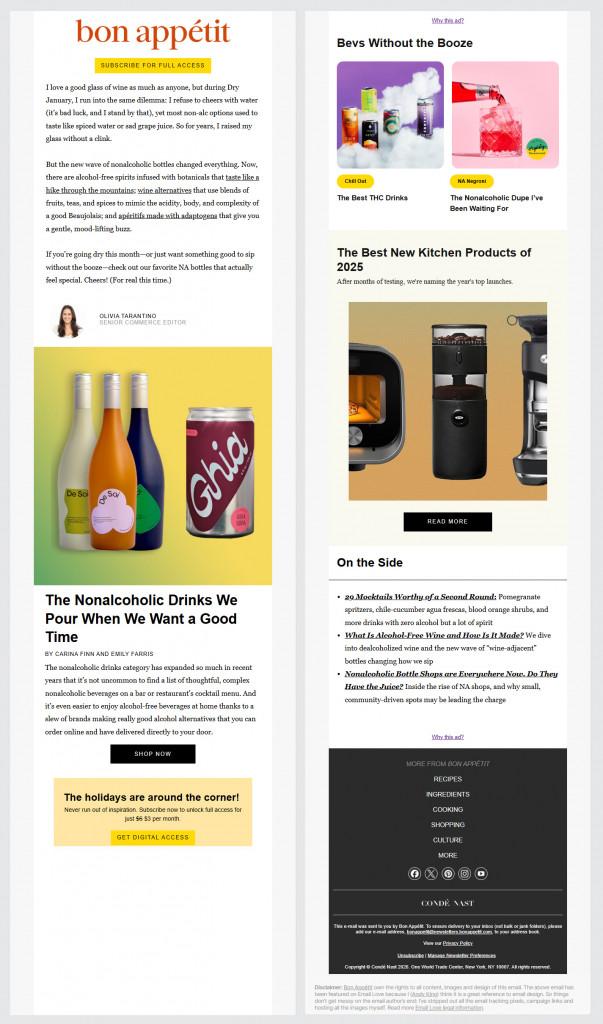
Example of Bon Appétit’s email newsletter featuring editorial content, non-alcoholic drink recommendations, and product highlights.
What This Newsletter Does Well
- Follows an editorial-first approach, with informational content leading over promotion.
- Utilizes a timely theme like “Dry January” to introduce readers to new non-alcoholic beverage brands.
- Maintains a clean structure that is easy-to-scan and visually engaging.
- Uses strong imagery to spark curiosity and encourage deeper reading.
- Integrates CTAs naturally – “Shop Now” for products and “Read More” to drive website engagement.
Miro:
Miro is a widely used digital collaboration platform that helps organizations manage projects within different teams. One can plan, build, execute, and ideate visually in a shared workspace. As you can see, their newsletter gives readers a peek into the major changes driven by the advent of AI.
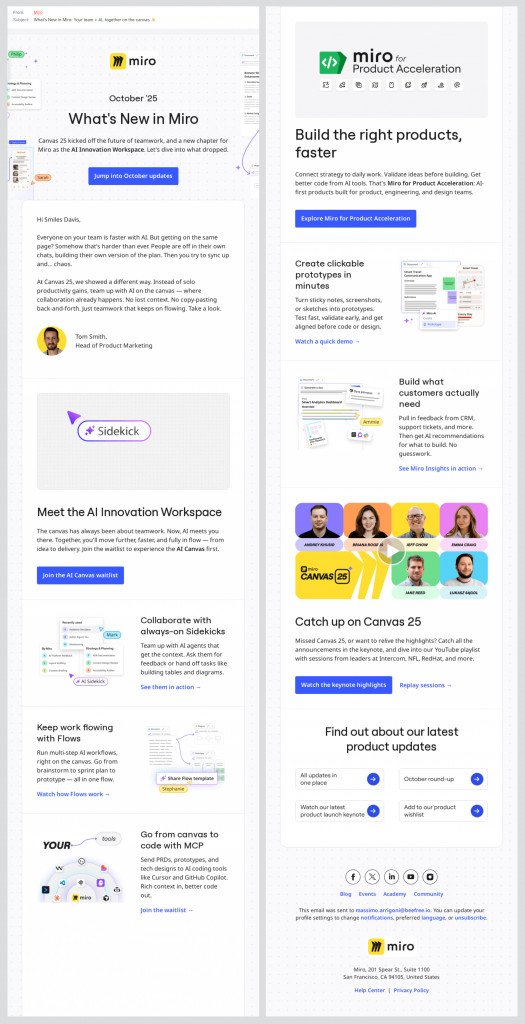
Example of Miro’s email newsletter highlighting AI-powered collaboration tools, product demos, and new feature updates.
What This Newsletter Does Well
- Highlights product innovation and AI updates in a clear, focused manner.
- Uses clean UI screenshots to visually demonstrate product improvements.
- Keeps a neat framework in the newsletter that makes the content easy to scan.
- Presents demos and updates concisely, helping readers absorb key information quickly.
- Uses soft, action-driven CTAs – “Explore,” “Watch Demo,” “Join Waitlist” – to guide product discovery without being pushy.
Kings Place:
London’s iconic art and cultural venue, Kings Place, hosts a variety of events, including literary programs, theatre, concerts, film screenings, and festivals.
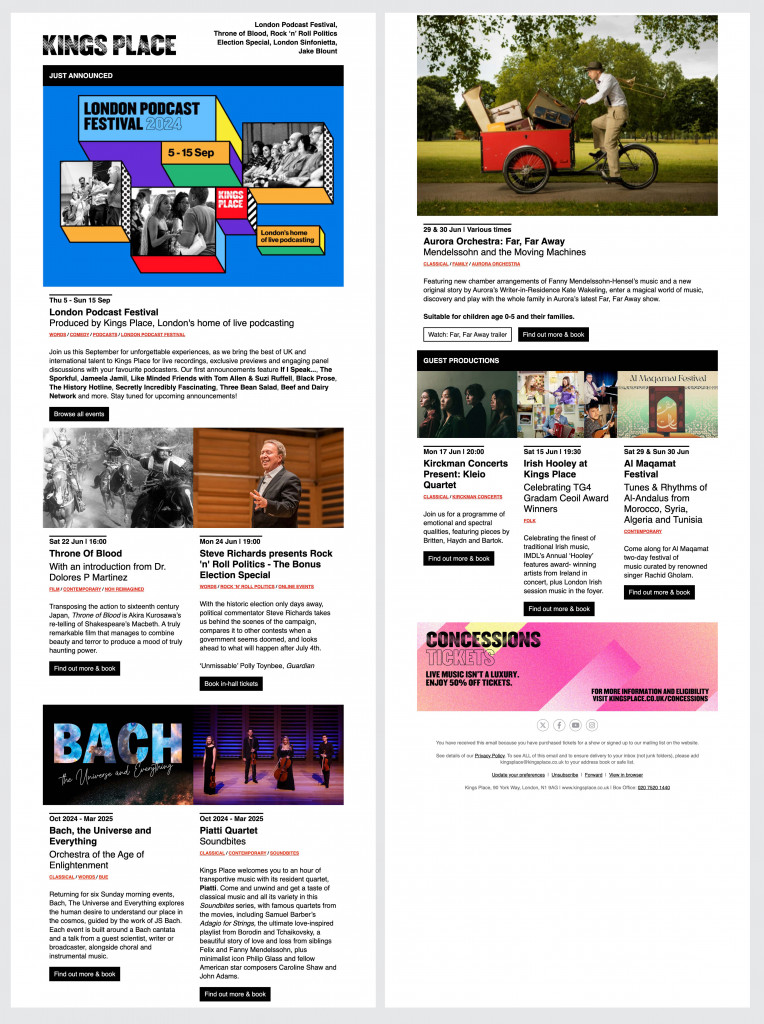
Example of Kings Place’s email newsletter highlighting upcoming cultural events, concerts, and festival announcements.
What This Newsletter Does Well
- Uses vibrant colors, bold typography, and strong imagery to capture attention without overwhelming the reader.
- Presents upcoming events clearly, making the content informative and easy to follow.
- Maintains a visually rich yet balanced design that enhances readability.
- Places CTAs strategically in the newsletter design to guide readers toward event details and bookings.
Wealthsimple:
Wealthsimple is a Canada-based commission-free financial technology platform that offers investment and financial management services.
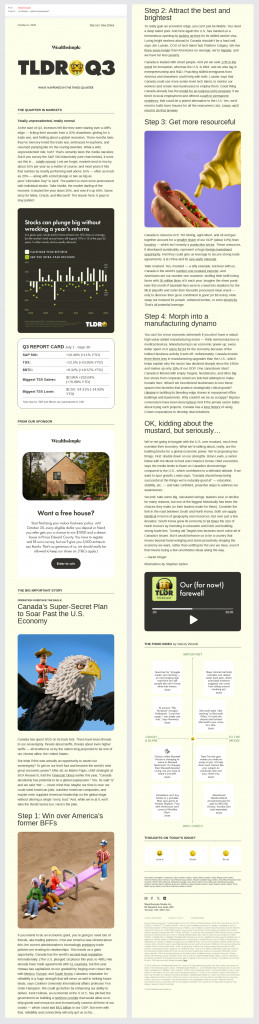
Example of Wealthsimple’s email newsletter featuring market insights, economic trends, and data-driven financial analysis.
What This Newsletter Does Well
- Focuses on informational, reader-first content rather than overt promotion.
- Explains market trends and global financial shifts using data charts, figures, and clear visual examples.
- Uses a long-form, text-driven format to provide deeper financial insight.
- Centers on real-world analysis, such as Canada’s current economic condition, adding relevance and context.
- Embeds subtle, non-intrusive CTAs within the content to encourage deeper reading and exploration.
The Good Trade:
The Good Trade is a lifestyle and wellness publication focused on mindful living and sustainability.
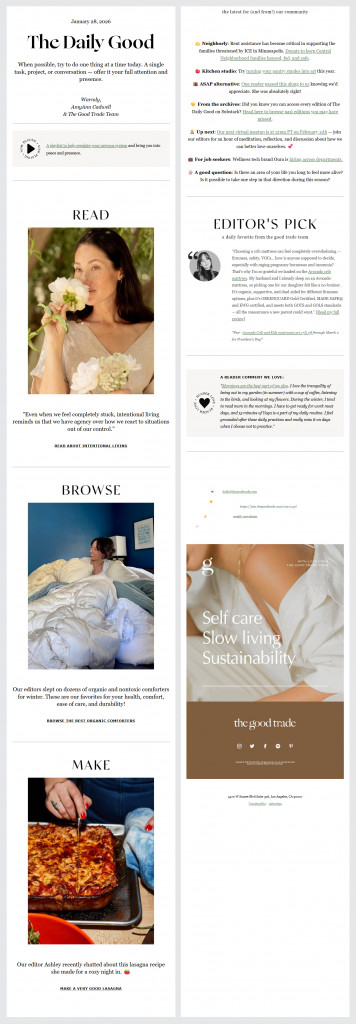
Example of The Good Trade email newsletter featuring self-care, intentional living content, and editorial recommendations.
What This Newsletter Does Well
- Maintains a conversational, editorial tone that feels engaging and personal.
- Blends lifestyle elements like mood-based playlists, product recommendations, and simple recipes to create a holistic experience.
- Includes a section dedicated to loyal readers’ comments.
- Keeps the focus on self-care and intentional living, making content informative rather than promotional.
- Uses a minimal, calming design with soft imagery, muted tones, and generous spacing for relaxed reading.
- Places CTAs – “Read,” “Browse,” and “Make” – in the content to drive interest without being sales-driven.
NordicWave:
NordicWave is a wellness and recovery brand that offers cold plunge therapy products designed to improve physical recovery and mental clarity.
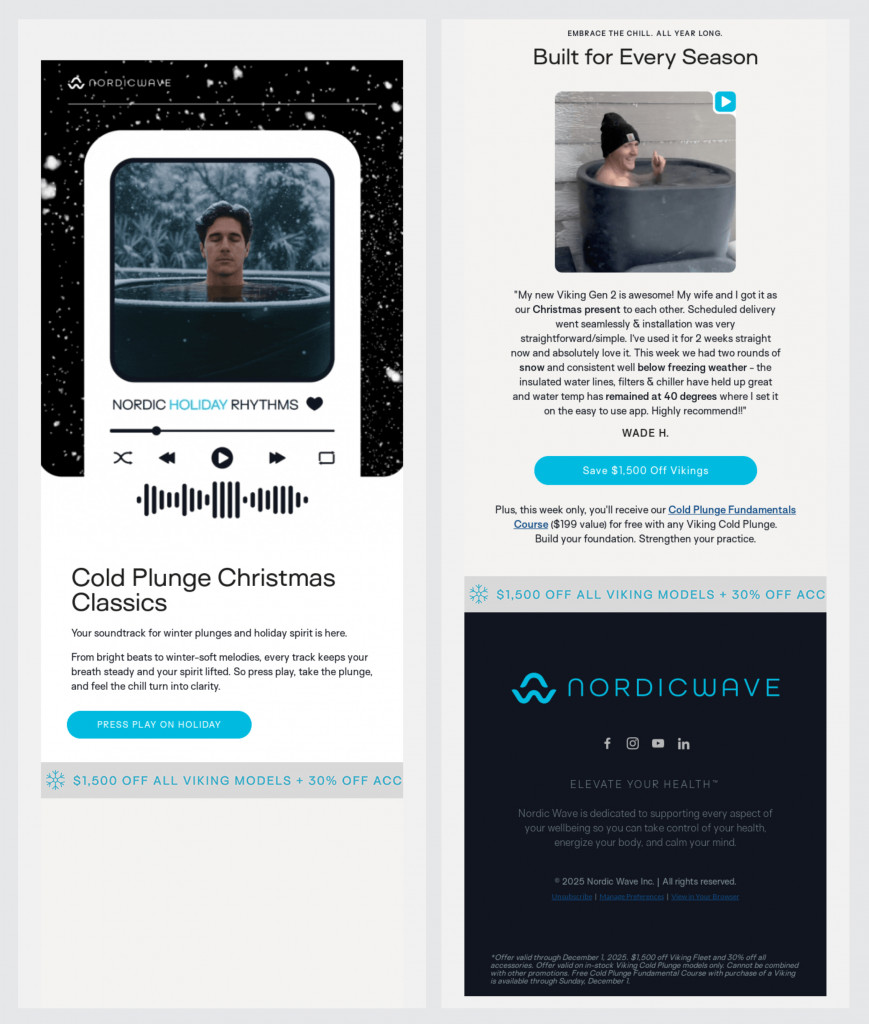
Example of NordicWave’s email newsletter featuring cold plunge products, seasonal offers, and promotional discounts.
What This Newsletter Does Well
- Uses a seasonal, promotion-led approach to drive purchase intent.
- Highlights discounts and offers clearly, making the proposition easy to understand.
- Reinforces credibility through product demos and customer testimonials.
- Blends lifestyle elements like a themed playlist to support the brand experience and provide inspiration.
- Uses bold, action-driven CTAs like “Press Play on Holiday” and “Save $1,500 Off Vikings,” guiding readers toward purchase.
Mercedes-AMG PETRONAS F1 Team:
Mercedes-AMG PETRONAS Formula One Team is one of the top-contending teams in Formula One (F1).
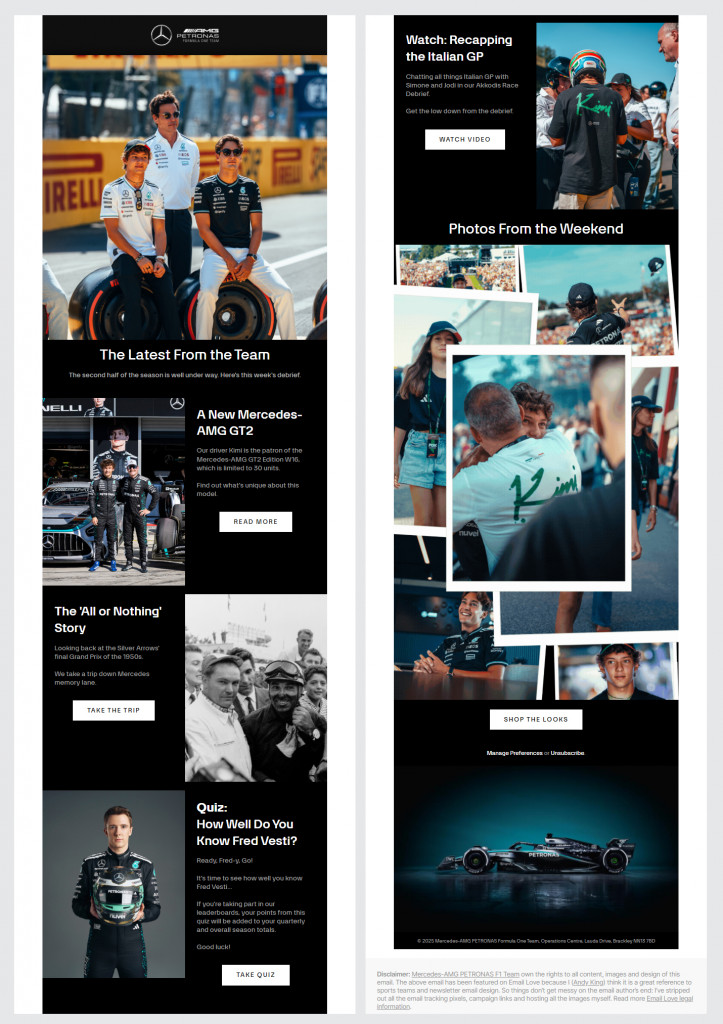
Example of Mercedes-AMG PETRONAS F1 Team’s email newsletter featuring race updates, team highlights, and merchandise promotion.
What This Newsletter Does Well
- Focuses on informational, fan-first content centered around race updates and season dynamics.
- Uses strong visuals with dark and light tones in the newsletter design that reflect the brand’s colors and racing identity.
- Maintains a sleek, easy-to-follow presentation that keeps readers interested.
- Combines diverse content such as race images, interactive quizzes, brand trivia, and expert video insights to enrich reader experience.
- Integrates subtle promotion through the CTA like “Shop The Looks”, linking fans to merchandise without disrupting the flow.
GQ Recommends:
GQ is a popular men’s fashion and lifestyle publication that sends weekly newsletters highlighting trends and product recommendations.
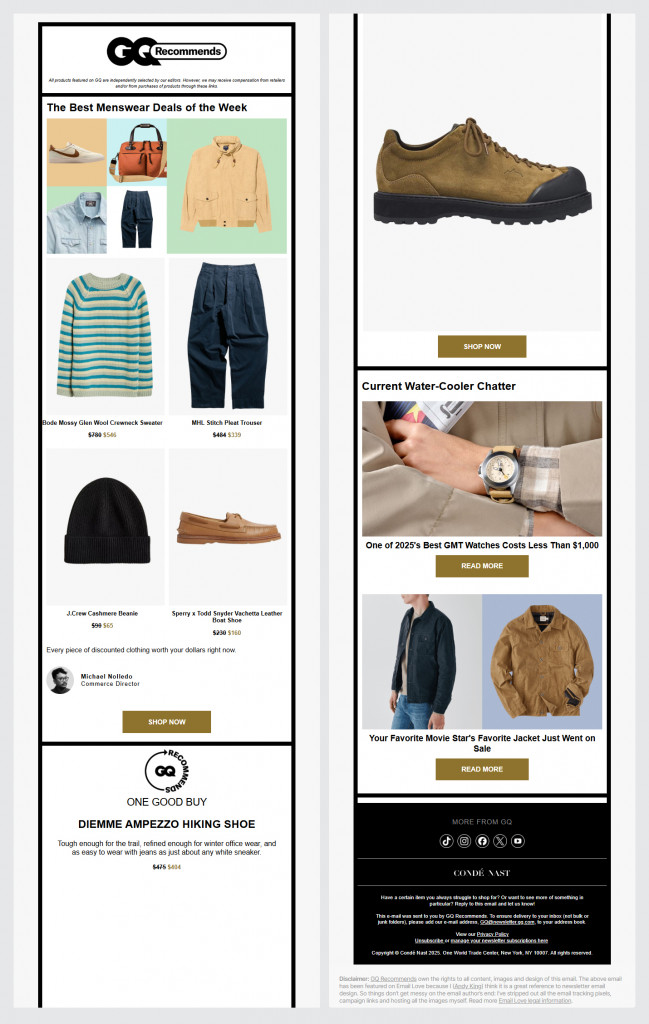
Example of GQ Recommends email newsletter featuring menswear deals, curated product picks, and shopping-focused content.
What This Newsletter Does Well
- Uses a promotion-led format supported by editorial voice, blending commerce with credibility.
- Organizes content into clear, category-based sections for easy browsing.
- Focuses on curated themes like “Deals of the Week” and “One Good Buy” to guide purchase decisions.
- Uses clean product imagery to highlight items without clutter.
- Applies brand colors effectively, especially in CTAs, to draw attention and drive action in the newsletter content.
Four Seasons:
Four Seasons is a luxury hotel brand that uses its newsletter to showcase seasonal getaways across destinations, supported by elegant photography and refined visual storytelling.
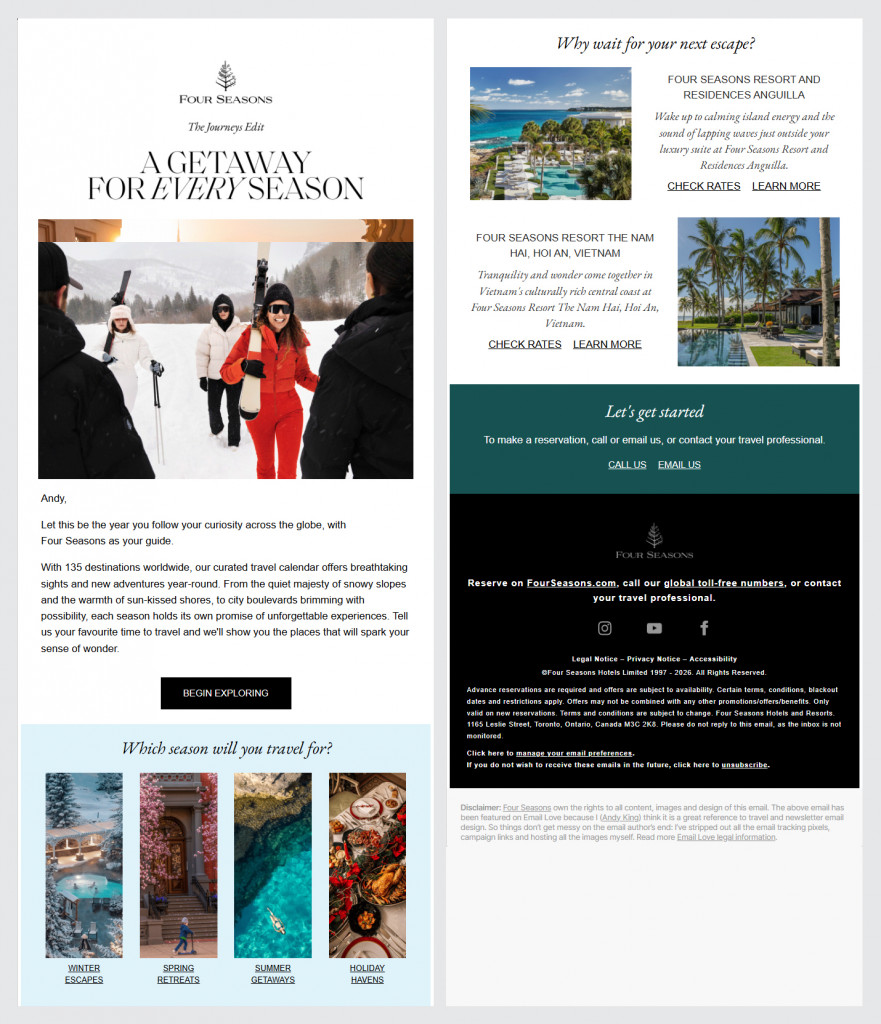
Example of Four Seasons email newsletter featuring personalized travel recommendations, seasonal getaways, and luxury destinations.
What This Newsletter Does Well
- Uses aspirational visuals and elegant design to reflect the brand’s luxury identity.
- Adds personalization in the subject line to create a more direct, engaging connection- “Andy, where will 2026 take you?”
- Presents curated destinations and travel themes in a clean, easy-to-follow setup.
- Maintains a soft, experience-led marketing approach rather than hard selling.
- Uses clear CTAs – “Begin Exploring,” “Check Rates,” and “Learn More” – guiding readers toward travel planning and bookings.
UChicago (University of Chicago):
The University of Chicago’s newsletter style is mainly informational, sharing research highlights, academic developments, campus stories, and institutional updates.
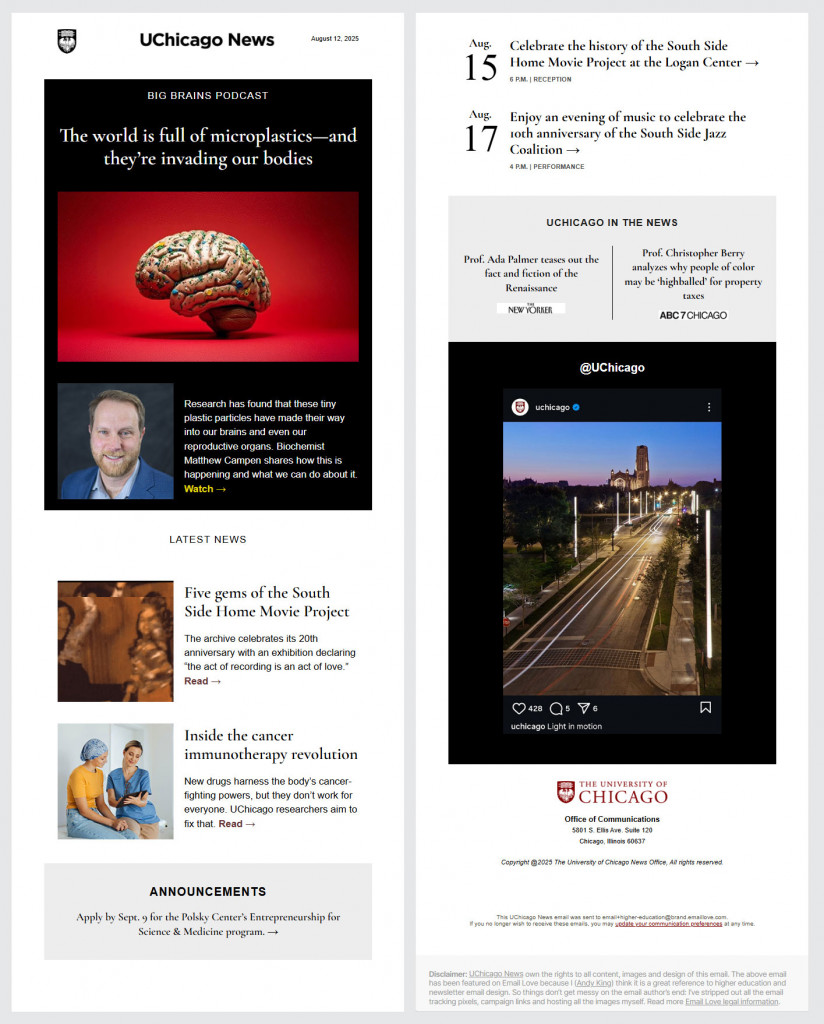
Example of University of Chicago’s email newsletter featuring research stories, campus updates, and academic news.
What This Newsletter Does Well
- Focuses on informational, knowledge-driven content.
- Organizes content into clear sections like feature stories, news, and announcements for easy navigation.
- Uses strong visuals and an editorial-style presentation in the newsletter design to enhance readability.
- Maintains a clean, structured arrangement that supports smooth scanning.
- Integrates subtle CTAs – “Watch” and “Read” – to guide readers toward engagement with articles and updates.
Ready to build your own high-performing email newsletter? Start crafting a value-driven newsletter strategy with LeadsPanda today and turn your subscribers into loyal readers and customers.
How to get started?
Still unsure of where and how to begin? Listed below is a list of websites that can help you through the process.
Substack: One of the most popular publishing platforms right now; you can use their free or paid version. They have options to help you create and send newsletters. It has an easy-to-use interface, monetization options, and a built-in subscription.
HubSpot: The website offers a robust newsletter template with a drag-and-drop design. You can design your newsletter and send targeted email newsletters using CRM data.
MailerLite: Preferred among beginners and small business owners for its ease of use, it comes equipped with an AI writing assistant, email surveys, a social share block, and other features, all within one platform. You can also opt for the free plan along with automation support.
Canva Newsletter Maker: If you want to concentrate on creating impactful design elements, then Canva is a great website. They have an array of newsletter templates, graphics, and layouts to choose from.
Beehiiv: This platform caters to creators and marketers alike. It provides tools for analytics, audience growth, and customization. It’s ranked as a favorite for larger newsletter audiences. It has features designed for monetization if that’s what you’re looking for.
To conclude…
Newsletters prove to be a successful relationship-building channel only when they’re intended to inform, engage, and build trust rather than sell.
As these examples show, effective newsletters exist across different industries, institutions, and organizations. I hope these help marketers understand what works as a useful starting point when planning their own strategy. In a chaotic digital world, meaningful communication still wins. In the years to come, it will be exciting to see how newsletters continue to evolve with AI.
Start a conversation below in the comments section to share your thoughts on your favorite newsletters.
If you found these email newsletter examples helpful, consider subscribing to stay updated on more marketing insights, strategies, and inspiration.
Share This Story
About the Author: Umikaa Ghatge

Related Posts



Get the latest growth ideas, strategies, and best practices delivered to your inbox.
Quick read that helps 7000+ subscribers.